In an economy where industry is scaling down due to a harsh operating environment, Bakhresa Malawi Limited has invested $100 million (about K175.1 billion) in a cooking oil refinery in Blantyre, creating 500 direct jobs.
President Lazarus Chakwera yesterday presided over the commissioning of the plant with a commitment to facilitate the productive capacity of local farmers.
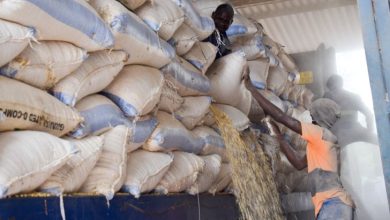
The factory has the capacity to crush 500 metric tonnes (MT) of soya beans per day and the firm projects to be buying about 150 000MT of soya beans from rural farmers every harvest season, in the process assuring farmers a ready market.
Besides, the company said thousands more jobs are expected to be created indirectly across the broader value chain, including farming, transportation, distribution and support services.

conditions . | Nation
Speaking at the launch, the President said his administration was geared to give companies such as Bakhresa an opportunity to grow by helping to boost the capacity of farmers.
He said: “At the moment, Malawi already has the capacity to process 600 000 tonnes of soya and this Bakhresa plant will now mean we can process close to 800 000 metric tonnes.
“But the question I want us to grapple with in the second term of my presidency is where is the 800 000 metric tonnes of soya to be processed at factories like this going to come from? “
The President said through the investment Bakhresa is contributing to the realisation of the country’s long-term development strategy, Malawi 2063 to create an inclusively-wealth, industrialised upper middle-income country.
Bakhresa, one of the success stories of the privatisation programme having acquired the then State-owned Grain and Milling Company, also produces export-quality 500MT of bread flour per day, thereby contributing to import substitution.
Bakhresa Malawi Limited general manager Venkatesh Rao Pattipati said the factory, initially planned for commissioning in 2023, faced several setbacks, including foreign exchange shortages, adverse weather conditions and bureaucratic hurdles that resulted in cost overruns and delays.
He said the firm remained committed to contributing to Malawi’s socio-economic development, but called for the need to address persistent bottlenecks at the macro level which continue to challenge the private sector operating environment.
Said Pattipati: “One such challenge is the 30 percent mandatory conversion of export proceeds to the Reserve Bank of Malawi [RBM] which discourages formal exports and local manufacturing while indirectly encouraging informal trading.
“Despite your [the government’s] commendable efforts to revitalise and grow the manufacturing sector, smuggling continues to undermine these achievements—eroding the competitiveness of local industries, distorting markets, and delaying the visible impact of your progressive policies.”
He expressed optimism that with decisive engagement, stakeholders will find coordinated solutions to drive economic development and foster inclusive wealth creation, particularly benefitting the rural communities as espoused in MW2063.
From their initial focus on wheat flour milling, the firm has successfully ventured into soap manufacturing, Azam TV DTH subscription management services, commercial farming and now the solvent extraction plant and cooking oil refinery.
According to Pattipati, the introduction of Bakhresa’s cooking oil brand, Soyalite, on the market has influenced a 20 percent reduction in cooking oil retail prices by other players.
Spot-checks show that on average, a two-litre bottle of Soyalite cooking oil fetches K13 000 while most brands fetch about K17 000.
National Working Group on Trade and Policy chairperson Frederick Changaya said in an interview yesterday that achieing MW2063 will need policy coherence, timing and appropriateness.
“There should be coherence where monetary and fiscal policies are in sync. Oftentimes, they are not,” said the development economist and Applecore Grain & Milling Limited managing director.
Meanwhile, Minister of Trade and Industry Vitumbiko Mumba said government will continue to make policy decisions that favour local production and products than imported goods, including the draft National Industrial Policy, targeted removal of regulatory bottlenecks, prioritisation of foreign exchange allocations for key manufacturers, greater emphasis on evidence-based decision-making and streamlining of trade licensing for strategic sectors.
“As a government, we are creating the conditions. But we cannot industrialise Malawi with foreign investment alone. We need greater participation of local entrepreneurs in manufacturing,” he said.
Upon emerging the successful bidder of Grain & Milling, Bakhresa Malawi Limited invested in modern computerised wheat mills with a combined capacity of 500MT per day. Over the years, the firm has diversified and invested in soap manufacturing plant and 50 000MT wheat storage facilities.
It is part of Bakhresa Group headquartered in Tanzania which has expanded across various divisions over time with over 30 subsidiaries and 28 fields of operation across nine countries in Africa.